

Revolutionizing Rehab: Why AI-Native Prior Authorization is the New Standard for 2026
January 20, 2026 | by Sarah Anderson
Using Generative AI to Reduce Administrative Burden Without Risking Compliance or Patient Safety

The Shift from Simple Automation to AI-Native Intelligence
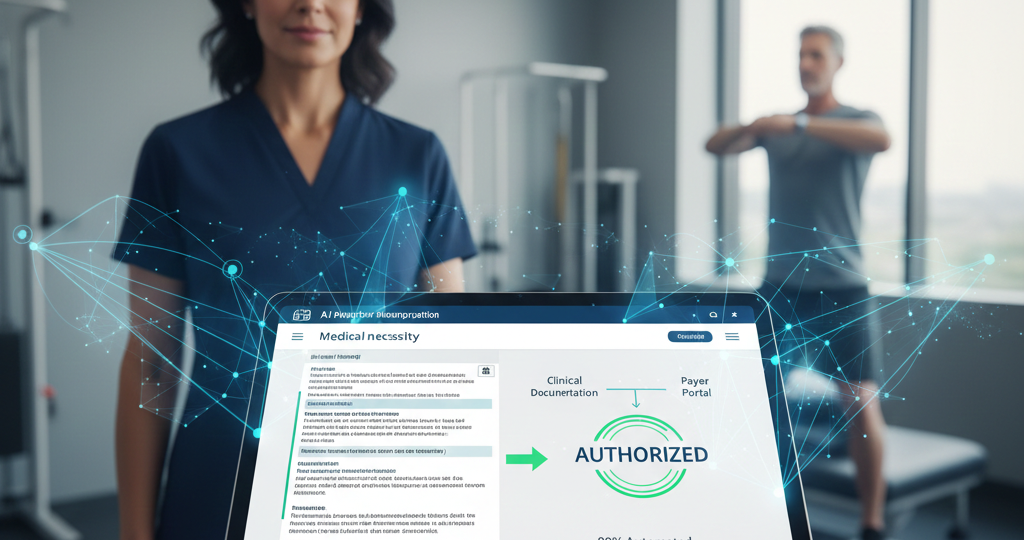
In the rapidly evolving landscape of rehab therapy, “AI-native” prior authorization has shifted from a luxury to a necessity for clinic survival. Unlike traditional automation that simply mimics human clicks, AI-native systems are built directly into the clinical workflow to interpret complex therapist notes. This ensures that every authorization request is backed by strong medical necessity, effectively bridging the gap between clinical intent and payer requirements.
Driving Revenue Growth Through 80% Workflow Automation
Current industry benchmarks show that these systems can automate up to 80% of manual workflows while reducing denial rates by a staggering 75%. For physical and occupational therapy clinics, this means eliminating the “portal-hopping” that drains staff productivity and delays patient care. To maximize your financial health, it is also essential to stay current with the latest 2026 HCPCS updates to ensure your billing matches your authorized care.
Maximizing RCM Efficiency and Eliminating Hidden Costs
The impact on the bottom line is significant, with some mid-sized clinic groups saving nearly $80,000 in just three months by optimizing their RCM through AI. These savings are driven by the system’s ability to verify eligibility instantly and track authorization statuses in real-time without manual follow-up. Protecting this revenue also requires a strict adherence to surprise billing compliance for 2026, ensuring that out-of-network patient billing remains transparent and legal.
Navigating New Federal Interoperability Mandates
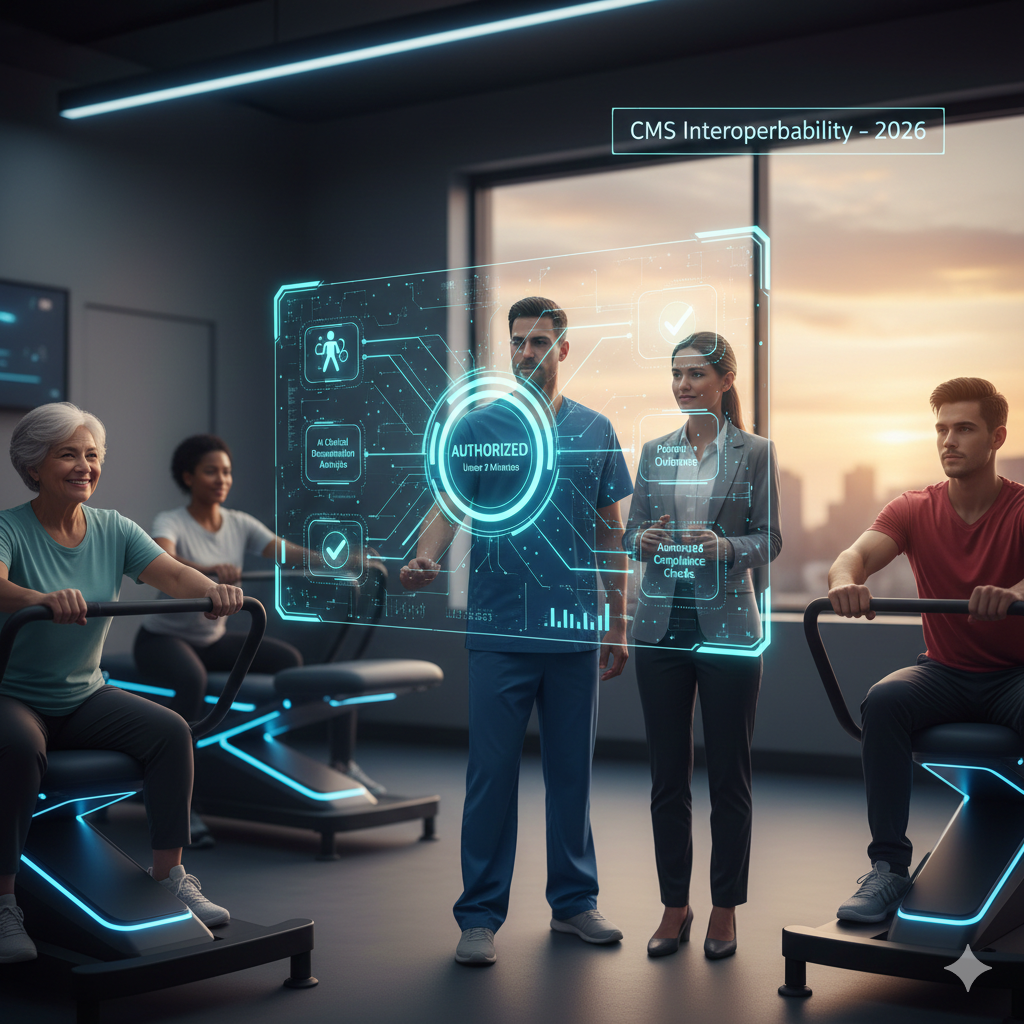
As we move into 2026, the CMS-0057-F mandate is forcing a digital-first approach to how payers and providers exchange authorization data. AI-native platforms are uniquely designed to handle these new interoperability requirements, making them far more resilient than older “bolt-on” software. To stay ahead of these regulatory shifts, providers should also review the new physical medicine and rehabilitation coding for 2026 to maintain a compliant and modern practice.
Enhancing Audit Protection and Coding Accuracy
One of the most complex aspects of rehab billing involves handling multiple services on the same day, where AI-native tools can help flag potential audit risks before submission. These systems use natural language processing to ensure that clinical documentation supports every billed code, significantly reducing the risk of clerical errors. For clinics performing multiple procedures, understanding the nuances of modifier 25 in 2026 is critical to avoid unnecessary denials during the authorization process.

Prioritizing Patient Care Over Administrative Burdens
One of the most complex aspects of rehab billing involves handling multiple services on the same day, where AI-native tools can help flag potential audit risks before submission. These systems use natural language processing to ensure that clinical documentation supports every billed code, significantly reducing the risk of clerical errors. For clinics performing multiple procedures, understanding the nuances of modifier 25 in 2026 is critical to avoid unnecessary denials during the authorization process.
Prioritizing Patient Care Over Administrative Burdens
Ultimately, adopting an AI-native approach allows your staff to focus on patient outcomes rather than administrative roadblocks. By automating the most tedious parts of the RCM cycle, clinics can ensure that patients start their treatment plans up to a week sooner than they would with manual processes. This transition not only secures your revenue cycle but also builds a more trustworthy, efficient, and patient-centered rehabilitation practice for the future.
Stay ahead of the 2026 healthcare shifts. Subscribe to our newsletter for exclusive AI-native insights, RCM strategies, and critical regulatory updates delivered to your inbox. Join a community of rehab professionals securing their clinic’s future—sign up today!
RELATED POSTS
View all


Medicare 2026: Your Essential Guide to the CMS Final Rule (And How to Win)
December 30, 2025 | by Steven Johnson

The 2026 OPPS Final Rule: A New Era for Outpatient Care
January 2, 2026 | by Sarah Anderson

Credentialing 101: Empowering a New Era of Provider Accuracy and Trust
October 27, 2025 | by Steven Johnson