


The Empathy Dividend: How AI Gives Clinicians The Gift of Being Present
December 11, 2025 | by Steven Johnson

Every healthcare professional, from the new RN to the Chief of Medicine, knows the feeling: the heavy, magnetic pull of the Electronic Health Record (EHR). The screen often glows brighter than the patient, and the tap-tap-tap of the keyboard feels louder than the conversation.
This isn’t just an administrative chore; it’s a crisis of attention. Studies have long confirmed that physicians spend nearly half their workday engaged with the EHR and desk work. For nurses, documentation often feels like a constant tether, pulling them away from the bedside.
The real cost of this time-tax isn’t measured in dollars. It’s measured in increased burnout, potential medical errors, and the subtle erosion of the crucial clinician-patient relationship. We all entered healthcare to care, not to click.
The good news? The next generation of AI and automation isn’t another digital burden. Instead, it’s the counter-force designed to tackle the administrative load. It wants to give you back the precious minutes and hours so you can finally close that chart – and truly open the door to genuine patient connection.
1. 💡 The AI Pivot: From Data Entry to Data Interpreter.
For years, technology has often demanded that clinicians adapt to it. Now, AI is adapting to you. The most powerful automation tools are focusing on replacing two of the biggest time-sinks for every HCP: the need to constantly type while listening to the patient and the sheer volume of documentation.
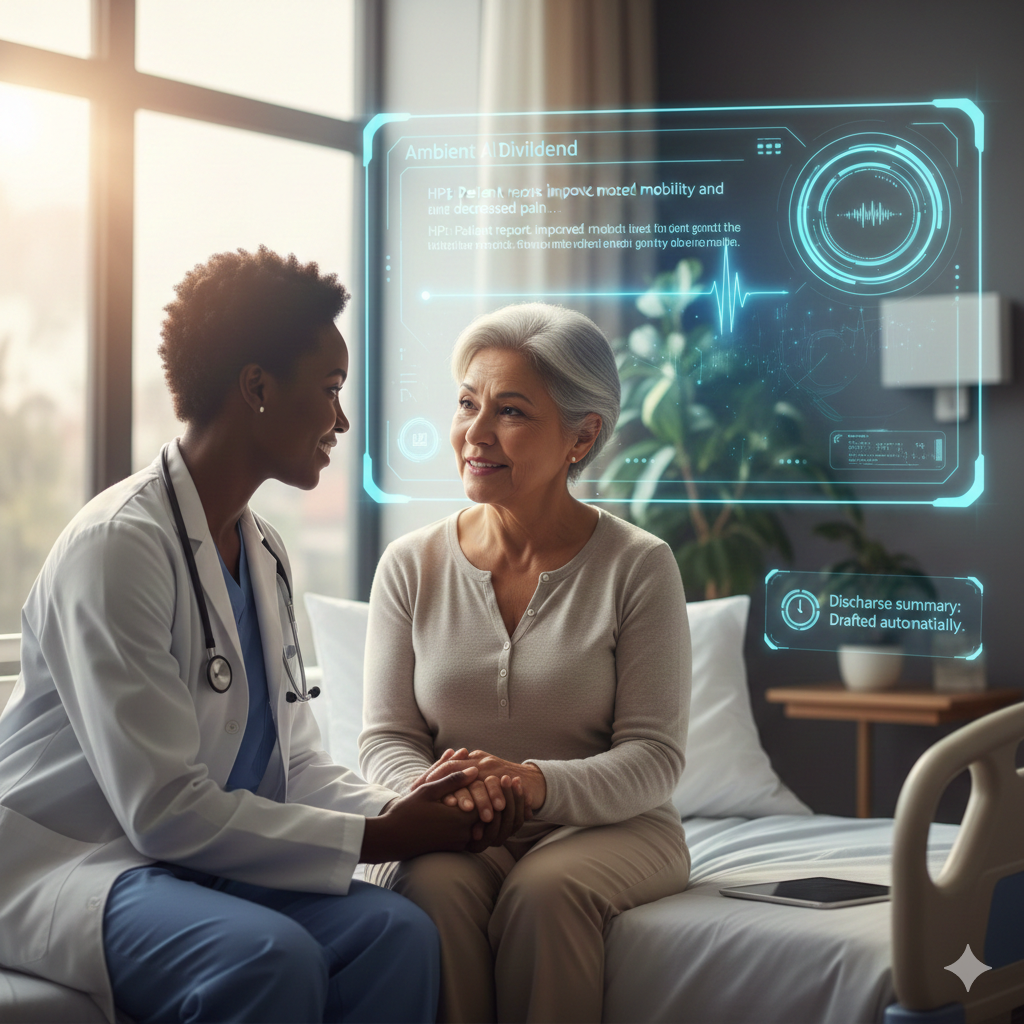
Imagine a scene: A doctor or nurse is speaking genuinely with a patient, making eye contact, with a subtle, futuristic interface in the background doing the typing for them. The focus is on the human connection.
A. The Silent Scribe: Reclaiming the H&P
Think about this familiar problem: As a patient describes their history, your brain is often simultaneously structuring the SOAP note in real-time. This dual processing means you can’t fully listen, and subconsciously, the patient knows it.
The AI solution? Ambient Digital Scribes. These cutting-edge tools use Generative AI to listen discreetly and ethically to the entire clinical encounter. They then automatically draft the patient’s history of present illness (HPI), assessment, and plan directly into your EHR template.
The Empathy Dividend here is huge. You can put the laptop down, make genuine eye contact, and truly process the nuance of what the patient is saying. The focus shifts entirely from data capture to deep
clinical engagement.
B. The Intelligent Navigator: Pre-empting Nursing Workload
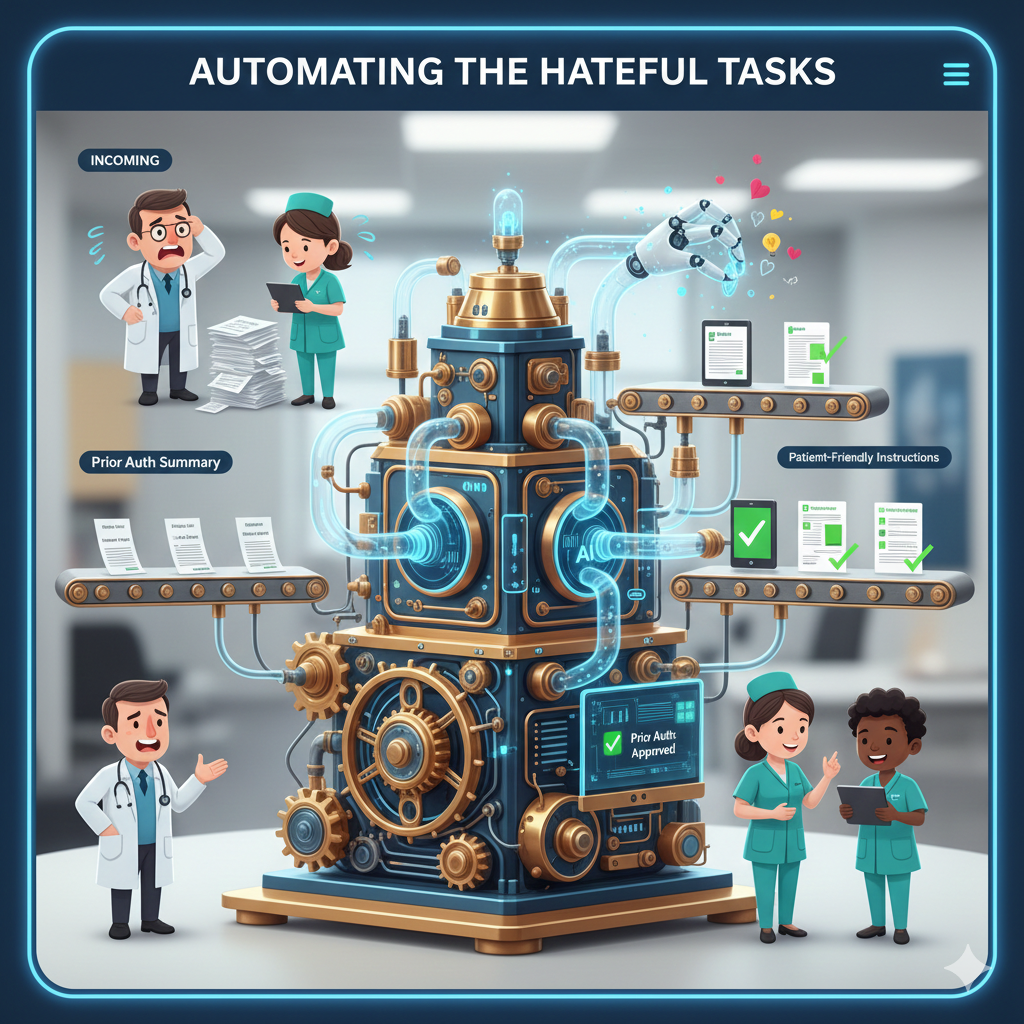
Consider the persistent workload for nurses: medication reconciliation, intricate discharge planning, and generating personalized patient education materials. These are repetitive, high-stakes tasks that consume precious nursing hours, diverting them from direct care.
The AI solution? Smarter Workflow Automation. AI algorithms are now designed to significantly cut the time needed for complex processes like discharge planning. They can, for instance, analyze a patient’s Social Determinants of Health (SDoH) and clinical history to automatically highlight who needs the most intense follow-up. This shifts the nurse’s focus to proactive, preventative care.
These systems can also instantly generate patient-friendly discharge summaries in plain language, even auto-translating them as needed, all based on the dictated clinical note. The Empathy Dividend for nurses means gaining vital time to counsel patients on complicated instructions, answer critical questions, and provide the personalized human support that can prevent readmissions.
2. 🎯 The Target: Automating the “Hateful Tasks”
Ask any healthcare professional what contributes most to burnout, and they’ll list their “hateful tasks”—the necessary administrative evils that steal joy and energy from their true calling. AI is now here to strategically eliminate many of these.
Visualize a series of small, mundane, but frustrating tasks being effortlessly handled by invisible, efficient gears and levers.
Prefrences
Reclaim your time. Reclaim your practice.
The future of care is smart. The power is still yours.
RELATED POSTS
View all


CMS Final Rule for 2026: Converting RPM, CCM, and PCM into Actual Revenue
November 24, 2025 | by Steven Johnson

Professional OSHA Inspection Guide: Essential Workplace Safety Compliance
October 3, 2025 | by Steven Johnson

Telehealth 2026: The Ultimate Compliance Survival Guide for Modern Practices
May 2, 2026 | by Steven Johnson